Brunch & Breakfast
Peanut Butter Protein Bowl vs Tropical Fruit Bowl: Which Breakfast Suits You?
Peanut butter protein bowl or tropical fruit bowl? Compare protein, fibre, sugar, cost and fullness.
By the team at Melt & Mingle
·

Quick Answer: Protein Bowl or Fruit Bowl for Breakfast?
Choose a peanut butter protein bowl if you want to stay full for longer, need more protein after a workout, or have a long morning ahead. Choose a tropical fruit bowl if you want something light, cooling and quick, especially on hot days.
The protein bowl has roughly 15 to 25 g of protein. The fruit bowl usually has only 3 to 4 g, but it gives you plenty of vitamin C, fibre and water.
Peanut butter protein bowl | Tropical fruit bowl | |
|---|---|---|
Calories (estimate) | 400–550 kcal | 220–300 kcal |
Protein (estimate) | 15–25 g | 3–4 g |
Keeps you full | Longer | Shorter |
Best for | Gym days, long mornings | Hot weather, light start |
Prep time | 5–10 min | 5–10 min |
Nutrition figures are estimates based on USDA FoodData Central values for typical portions. They change with your ingredients and serving size.
What Is a Peanut Butter Protein Bowl?
A peanut butter protein bowl is a breakfast bowl built on a base of oats, curd or Greek yogurt, topped with peanut butter, banana and seeds. The goal is a filling mix of protein, healthy fats and slow carbs.
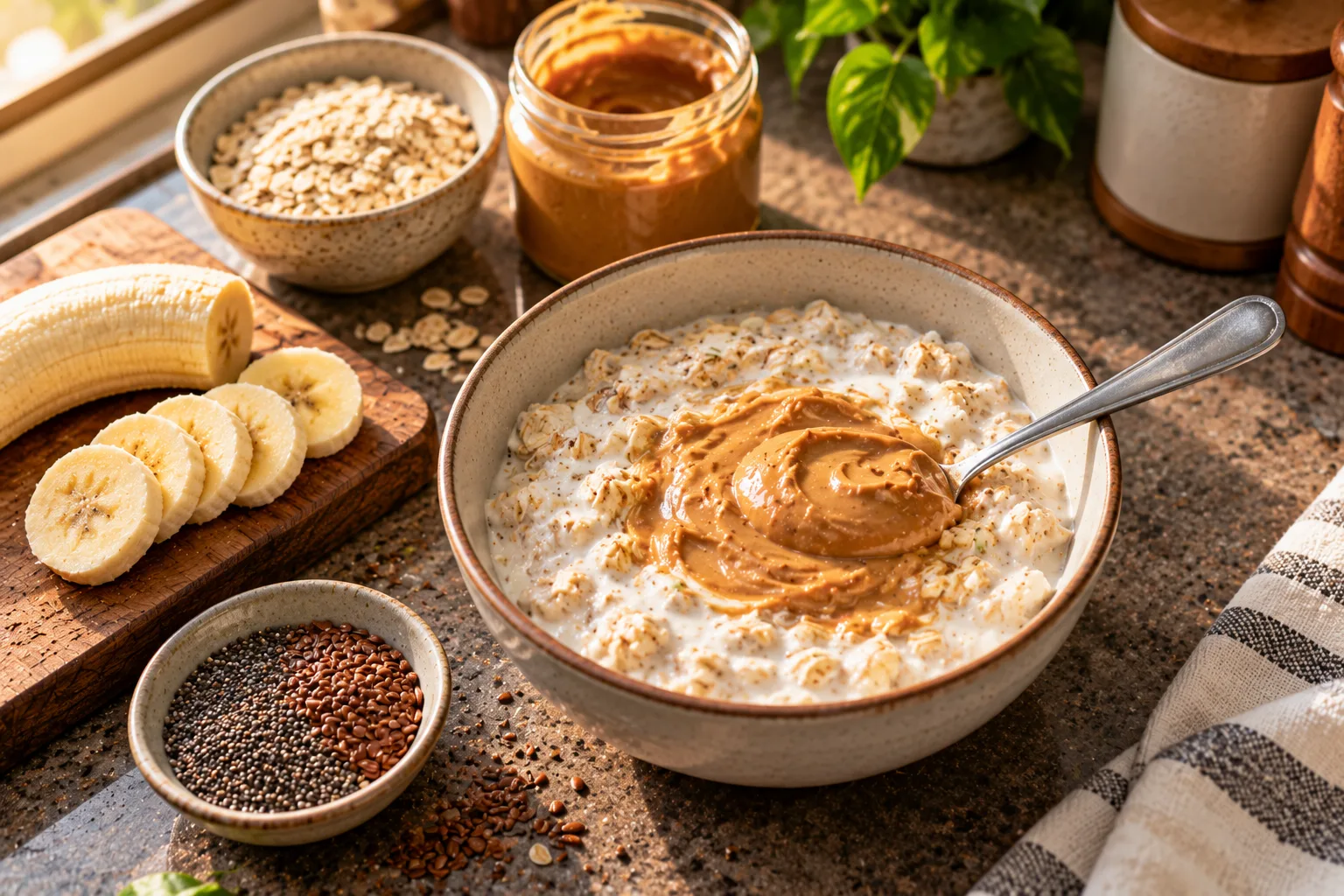
In Indian homes, it often starts with overnight oats or thick dahi. Some people add a scoop of whey or plant protein, or use hung curd for extra protein.
Typical Ingredients
Rolled oats or overnight oats
Curd, Greek yogurt or hung curd
1 to 2 tablespoons peanut butter
Half a banana, sliced
Chia, flax or pumpkin seeds
Optional: cocoa powder, cinnamon, a drizzle of honey
What Is a Tropical Fruit Bowl?
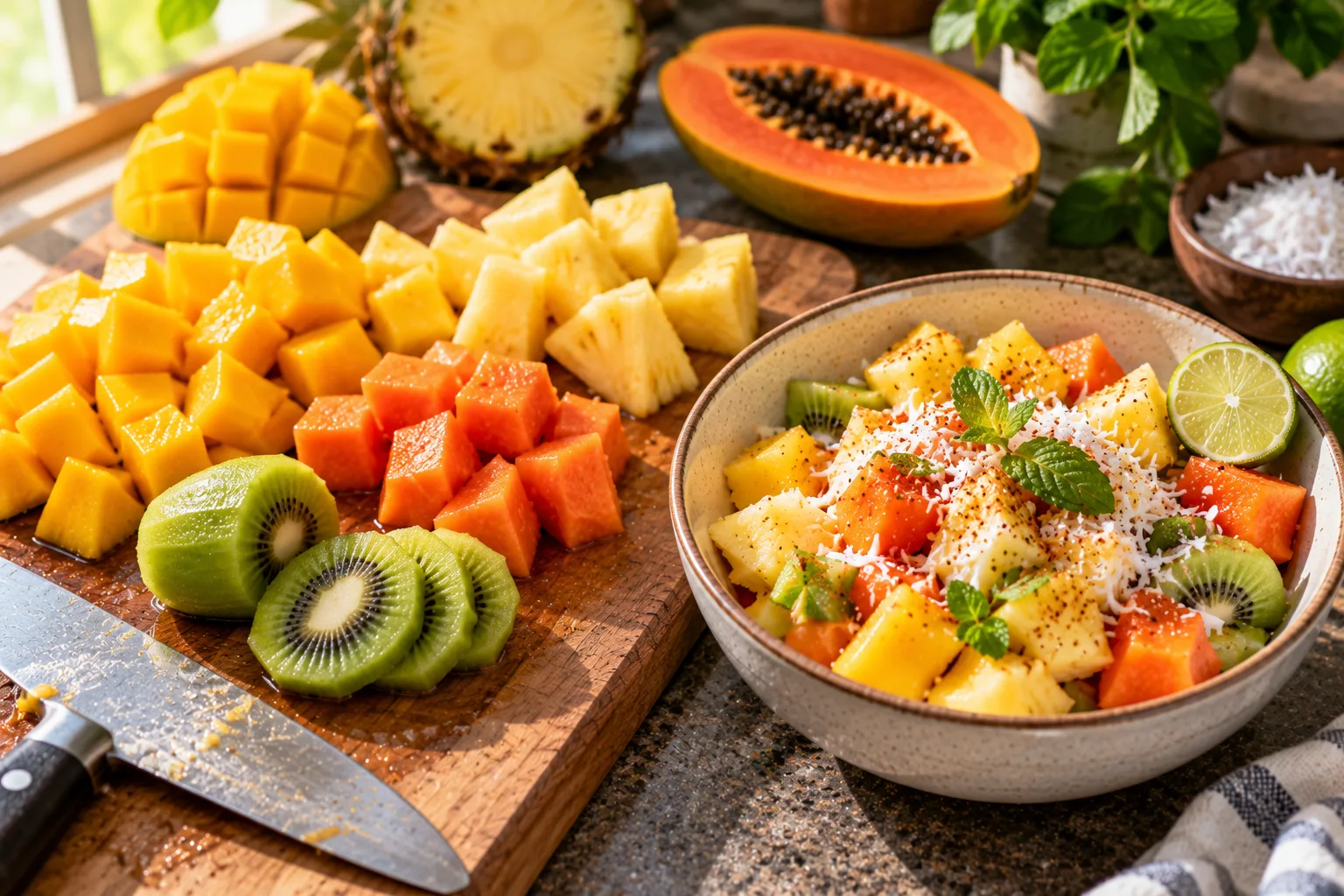
A tropical fruit bowl is a bowl of fresh cut tropical fruits like mango, pineapple, papaya and kiwi, often topped with coconut, seeds or a spoon of curd. It is light, juicy and naturally sweet.
In India, a fruit bowl is one of the easiest breakfasts to make with whatever is in season. Many people also eat it as a mid-morning snack.
Typical Ingredients
Mango (in summer)
Pineapple
Papaya
Kiwi
Fresh or desiccated coconut
Optional: pomegranate, banana, chia seeds, a squeeze of lime
Nutrition Comparison: Protein, Fibre, Sugar and Calories
A peanut butter protein bowl is higher in protein, fat and calories, while a tropical fruit bowl is higher in natural sugar, vitamin C and water. Both can give you a good amount of fibre.
Here is a rough breakdown for one bowl of each. These are estimates, built from USDA FoodData Central figures.
Per bowl (estimate) | Protein bowl* | Fruit bowl** |
|---|---|---|
Calories | 400–550 kcal | 220–300 kcal |
Protein | 15–25 g | 3–4 g |
Fibre | 7–10 g | 6–8 g |
Total sugar | 12–20 g | 40–45 g (natural) |
Fat | 15–22 g | 2–5 g |
*40 g oats, 150 g curd or Greek yogurt, 1 to 2 tbsp peanut butter, half a banana, 1 tbsp seeds. Greek yogurt gives the higher protein figure.
**1 cup mango, half cup each of pineapple and papaya, 1 kiwi, 1 tbsp coconut.
Key Numbers Behind the Bowls
According to USDA data, 2 tablespoons (32 g) of peanut butter have about 191 calories, 7.1 g protein and 1.6 g fibre. One cup of mango (165 g) has about 99 calories and 23 g of natural sugar, along with a lot of vitamin C.
For Indian foods like curd, dahi and local fruit varieties, the Indian Food Composition Tables (IFCT 2017) by ICMR-NIN are a useful reference. Values can differ slightly from USDA figures.
Which Bowl Keeps You Full for Longer?
The peanut butter protein bowl keeps you full for longer because protein, fat and fibre all slow digestion. The fruit bowl digests faster, so many people feel hungry again within a couple of hours.
Protein is widely known as the most filling nutrient, and that is the protein bowl's biggest advantage. Peanut butter's fat and the soluble fibre in oats add to that effect.
A fruit bowl is mostly water and natural sugar with some fibre. It feels refreshing, but on its own it may not carry you to lunch.
Energy and Blood Sugar: How Do They Compare?
A peanut butter protein bowl gives slower, steadier energy, while a tropical fruit bowl gives a quicker lift from natural sugars. Pairing fruit with protein or fat helps slow that rise.
Fruits like mango and pineapple are sweet and have more natural sugar than berries or guava. The fibre in whole fruit still makes them a better choice than juice.
If you have diabetes or are watching your blood sugar, talk to your doctor or dietitian about portions. A smaller fruit portion with curd, nuts or seeds is often a more balanced option, but individual needs vary.
Who Should Pick the Protein Bowl?
The peanut butter protein bowl suits people who exercise in the morning, have a long gap before lunch, or want a breakfast that keeps cravings away. It is also a good option for growing teenagers who need more energy.
Gym-goers and runners: the protein bowl helps meet morning protein needs
Long workdays: it keeps you going through back-to-back meetings
Weight management: being more filling may help some people snack less, but watch the peanut butter portion because it is calorie-dense
Who Should Pick the Fruit Bowl?
The tropical fruit bowl suits people who want a light, hydrating breakfast, especially in hot Indian summers. It is also great for kids, light eaters and anyone who struggles to eat fruit during the day.
Hot weather: juicy, water-rich fruits feel cooling and refreshing
Kids: colourful fruit is easy to love, and it helps build a fruit habit
Light eaters: good if a heavy breakfast makes you sluggish
Pre-workout: quick natural sugars can give a light energy boost before a short workout
Cost and Seasonal Indian Fruits
A fruit bowl is cheapest when you use fruits in season, while a protein bowl costs about the same all year because oats, curd and peanut butter are pantry staples. Prices vary by city and month, so check your local market.
Here is a rough guide to when common fruits are in season in India:
Fruit | Typical Indian season |
|---|---|
Mango | April to July |
Pineapple | Most of the year, peak in monsoon |
Papaya | Year-round |
Banana | Year-round |
Guava | Winter, roughly October to February |
Kiwi | Mostly imported, some grown in the Northeast and Himachal |
Kiwi and dragon fruit can be pricey in many cities. Swap them for guava, pomegranate or papaya to keep your fruit bowl affordable.
Prep Time: Which Is Faster?
Both bowls take about 5 to 10 minutes to make. The protein bowl can be even faster if you prep overnight oats the night before.
Cutting fruit takes a little more effort. To save time, chop papaya and pineapple the night before and keep them covered in the fridge.
How to Make a Peanut Butter Protein Bowl
Mix oats with curd or Greek yogurt, top with peanut butter, banana and seeds, and eat. For overnight oats, soak everything in the fridge the night before.
Serves 1
Add 40 g rolled oats to a bowl with 150 g curd or Greek yogurt and a splash of milk.
Stir well and leave for 10 minutes, or refrigerate overnight.
Top with half a sliced banana.
Add 1 to 2 tablespoons peanut butter.
Sprinkle 1 tablespoon chia or flax seeds and a pinch of cinnamon.
For more protein in the protein bowl, use hung curd or add a scoop of protein powder. Choose an unsweetened peanut butter with no added sugar or palm oil.
How to Make a Tropical Fruit Bowl
Cut mango, pineapple, papaya and kiwi into bite-sized pieces, add to a bowl and top with coconut and a squeeze of lime. It takes under 10 minutes.
Serves 1
Cube 1 cup mango, half a cup pineapple and half a cup papaya.
Peel and slice 1 kiwi.
Toss everything in a bowl with a squeeze of lime juice.
Top with 1 tablespoon grated coconut and a few mint leaves.
Add chia seeds or a spoon of curd if you want more staying power.
A pinch of chaat masala on the fruit bowl gives it a desi street-style twist.
Can You Combine Both Bowls?
Yes, combining both is often the best option. Add a cup of tropical fruit to your protein bowl, or add curd, nuts and seeds to your fruit bowl.
This way you get the staying power of protein and the freshness and vitamins of fruit. Mango with peanut butter and curd works surprisingly well.
A simple combo: curd base, half a cup of mango and papaya, 1 tablespoon peanut butter and a sprinkle of seeds.
Healthy Breakfast Bowls in Bengaluru, Mumbai and Across India
Healthy breakfast bowls are now a regular sight at cafes, juice bars and health food spots in Bengaluru, Mumbai, Pune, Delhi and other Indian cities. Many offer both a protein bowl and a fruit bowl, along with smoothie bowls and acai bowls.
If you are buying one, check the menu for added sugar, honey, granola or sweetened yogurt. These can add a lot of hidden calories.
Search "healthy breakfast bowl near me" or "protein bowl near me" and look at recent reviews and photos. Making one at home is usually cheaper and lets you control the ingredients.
Frequently Asked Questions
Which is healthier, a protein bowl or a fruit bowl?
Neither is healthier in every case. A protein bowl is better for fullness and protein, while a fruit bowl is better for vitamin C, water and a lighter start.
How much protein is in a peanut butter protein bowl?
Roughly 15 to 25 g, depending on whether you use curd or Greek yogurt and how much peanut butter you add. These are estimates.
Is a fruit bowl enough for breakfast?
For some people, yes, especially light eaters. Most people stay full longer if they add curd, nuts or seeds to it.
Is peanut butter good for weight loss?
It can fit into a weight loss diet because it is filling, but it is calorie-dense. Stick to 1 to 2 tablespoons and choose one without added sugar.
Can diabetics eat a tropical fruit bowl?
Many people with diabetes can eat fruit in controlled portions, but needs differ. Check with your doctor or dietitian, and pair fruit with protein or fat.
Which bowl is better for kids?
A fruit bowl is easy and fun for kids. A small protein bowl with banana and peanut butter is a good option for active kids, if they have no peanut allergy.
Which is better before or after a workout?
A fruit bowl works well before a short workout for quick energy. A protein bowl is better after a workout because of its higher protein.
Where can I get a healthy breakfast bowl in Bengaluru or Mumbai?
Many cafes and health food spots in both cities serve breakfast bowls. Search "healthy breakfast bowl near me" and check recent reviews.
The Verdict: Which Breakfast Suits You?
Pick the peanut butter protein bowl if you need a filling, high-protein breakfast for busy or active mornings. Pick the tropical fruit bowl if you want something light, fresh and cooling, especially in summer.
Better still, mix them. A spoon of curd and peanut butter on your fruit, or a handful of mango on your oats, gives you the best of both bowls.
Visit Melt & Mingle in Peelamedu
Couverture hot chocolate, desserts and brunch near Hope College, Coimbatore. Open daily 8 AM to 11 PM.
Get directions & contact
